Lankaran-Masalli Tours
Active
9h
For a full refund, cancel at least 24 hours before the scheduled departure time.
Instant confirmation
Mobile or paper ticket accepted
About this experience
The Lankaran-Astara region is located in the south of Azerbaijan and is known as a subtropical region with exceptionally picturesque nature rich in diverse flora and fauna. The Hirkan National Park and the Gizilagach Reserve are located here.
The Masalli region, located in the south of Azerbaijan, 270 km away from the capital city is known for its subtropical climate, azure beaches on the coast of the Caspian Sea and the abundance of hot springs, the most famous of which is Istisu. The thermal, mineral spring, Istisu (literally "hot water") has long been a place of pilgrimage for people suffering from rheumatism and other musculoskeletal and skin diseases.
Available options
Lankaran-Masalli Tours
Pickup included
What's included
In-person guide
Detailed itinerary
1
You'll start at Gosha Gala Tower or you can also get picked up from your accommodation.
2
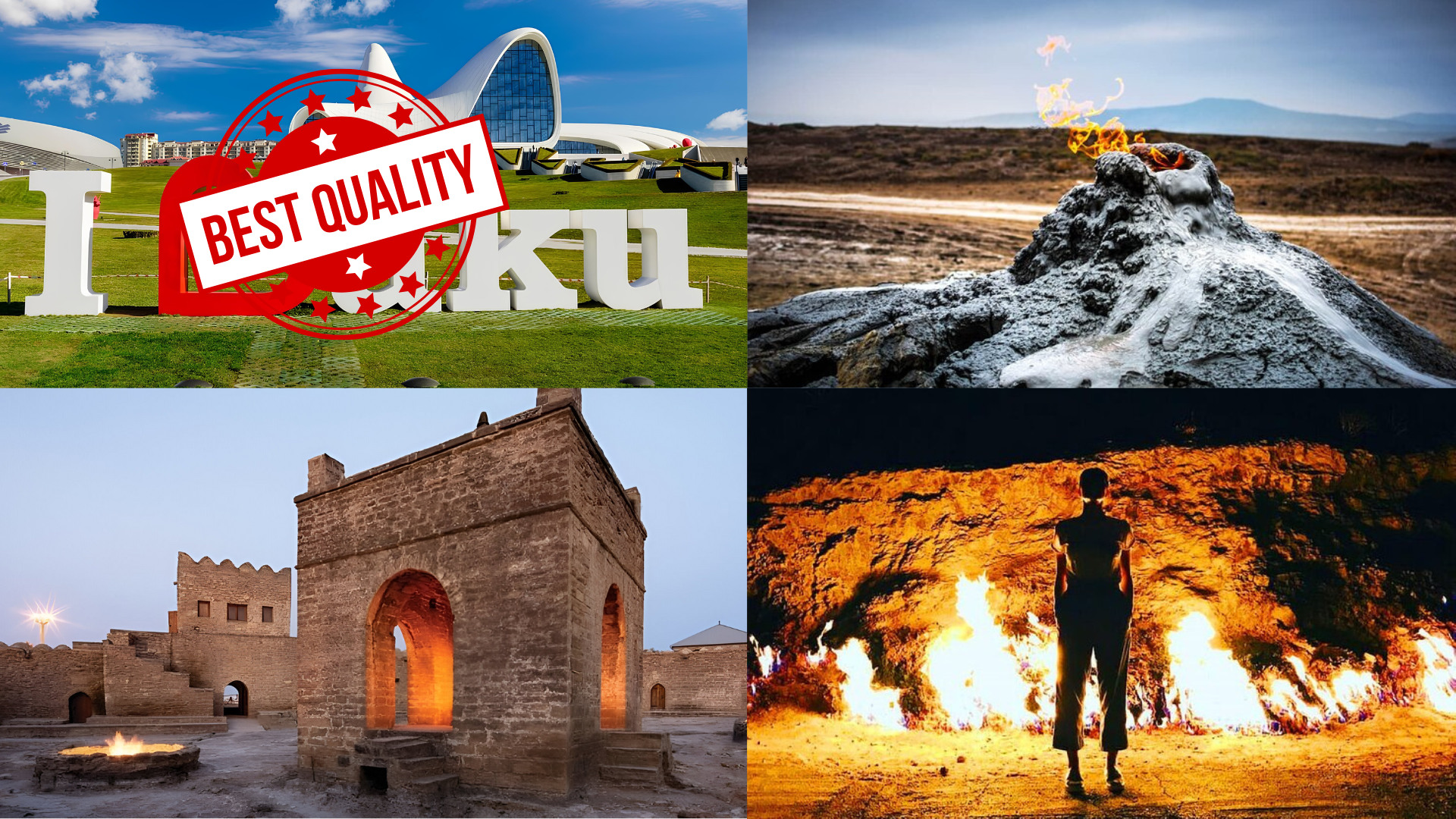
Masalli region: taking hot tubs natural source in the sanatorium "Istisu" natural wonder Yanar-bulag (burning water) and Yanar Dag (blazing mountain) Vilyash lake, waterfall.
3
Scattered throughout Azerbaijan’s southern zone, encompassing the regions of Masalli, Lankaran and Astara, are a plethora of local healing hot springs, all of which bear the name Istisu, meaning “hot water” in Azerbaijani. Some serve as small sanatoriums lost in local villages offering simple bathing booths to cure aches and pains with the hot mineral-rich water that’s been flowing naturally from underground for hundreds if not thousands of years. Others have been transformed into five-star spa centres offering massages and much more besides the traditional thermal water therapy.
4
Lankaran is located in the south-eastern part of Azerbaijan on the Caspian Sea. This is one of the most interesting cities in the country with its exquisite architecture, a wonderful climate and beautiful natural landscapes. Many of the local population are ethnic Talysh, who have to this day preserved their ancient traditions and customs. The Lankaran region's subtropical climate is ideal for growing citrus fruits, rice, grapes and tobacco and Lankaran tea is famous through the country. Hirkan National Park (home to the Caucasian leopard) and Gizilagaj Reserve are partially located in Lankaran and are extremely interesting for eco-tourism enthusiasts. There are also plenty of historical monuments in Lankaran, notably the Lankaran Fortress, or more accurately, its remaining fragments.
5
The Hirkan National Park is one of the pearls of Azerbaijani nature located in the south of the country, in the heart of the Talysh Mountains. Here, you won't find any camping areas, cafes, bars, restaurants and other such delights of modern tourism because this area is home to a natural wilderness dating back 60 million years with its own truly unique flora and fauna. This region has existed since the Ice Age and could easily be called a botanical garden. The Hirkan Ironwood tree, which is endemic to this area, not only survived the Ice Age but also indirectly became one of the reasons for the oil boom in Azerbaijan. Not many know that back in those days, the Nobel brothers were looking to buy a large quantity of ironwood for their business producing weapons. Luckily, transportation proved too expensive and the brothers were instead attrcated to the booming oil business. Soon after, Ludvig Nobel purchased an oil plant in Baku. The Hirkan Forest is home to another natural gem – Lake Khanbulagh, and while tigers used to inhabit the area until the late 1930s, today it is one of the last habitats of the Caucasian leopard.
6
You'll return to the starting point
Available languages
Guide guide
EN
Reviews breakdown
Viator
1.0
1 reviews
5★
0
4★
0
3★
0
2★
0
1★
1
Important information
Wheelchair accessible
Infants and small children can ride in a pram or stroller
Service animals allowed
Public transportation options are available nearby
Specialized infant seats are available
Transportation options are wheelchair accessible
All areas and surfaces are wheelchair accessible
Suitable for all physical fitness levels
Meeting point
Gosha Gala Tower
About Baku
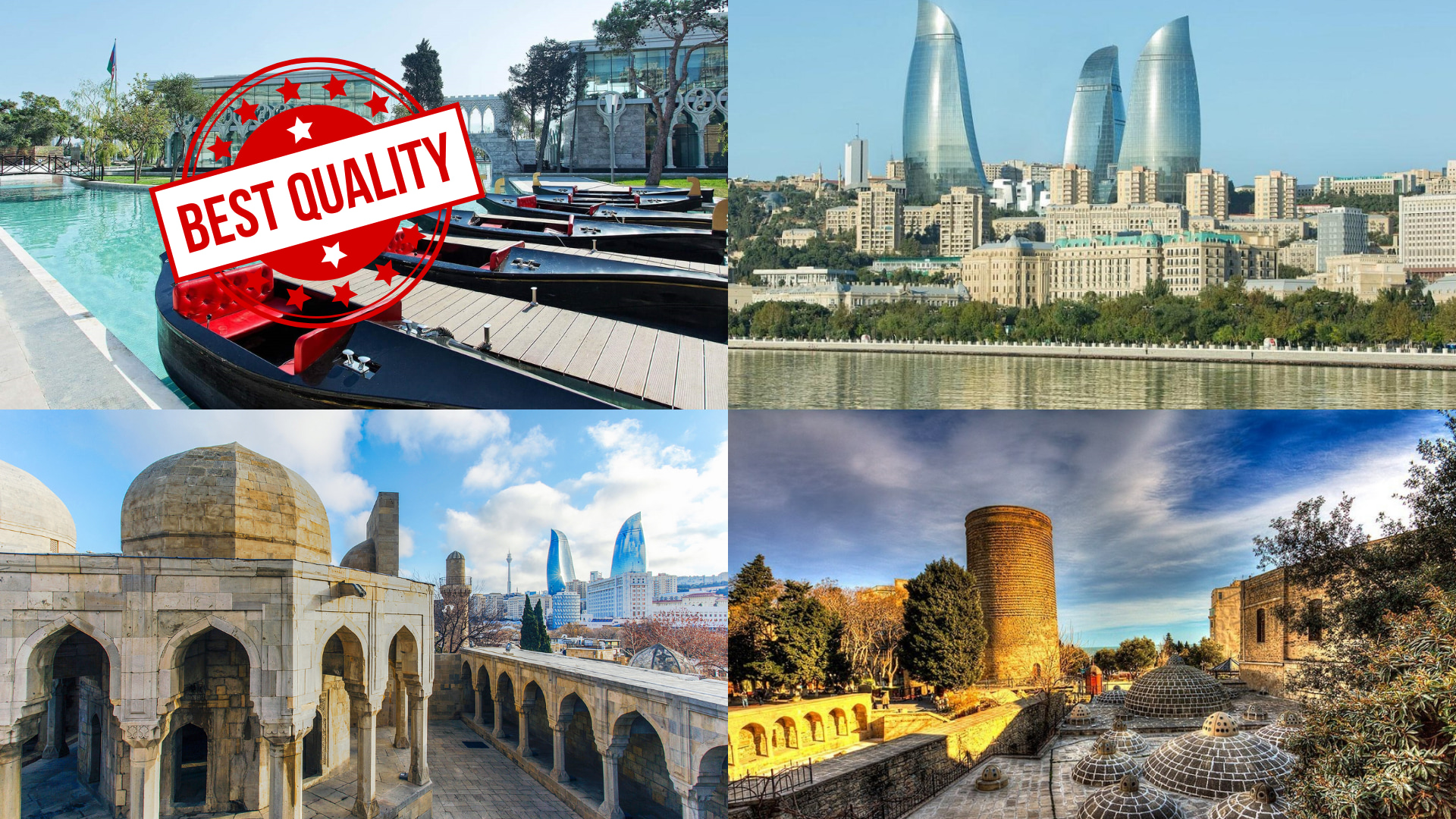
Baku, the capital of Azerbaijan, is a vibrant city where modernity meets tradition. Situated on the Caspian Sea, it's known for its futuristic skyline, historic sites, and rich cultural heritage, including the ancient Maiden Tower and the iconic Flame Towers.
Top Attractions
Maiden Tower
A 12th-century monument that is a symbol of Baku. Its exact purpose remains a mystery.
Historical
1-2 hours
Moderate (5 AZN)
Flame Towers
Three futuristic skyscrapers that are landmarks of modern Baku. The towers are designed to resemble flames, a reference to Baku's ancient history as a center of the fire-worshipping Zoroastrian religion.
Architecture
30 minutes to 1 hour
Free to view from outside
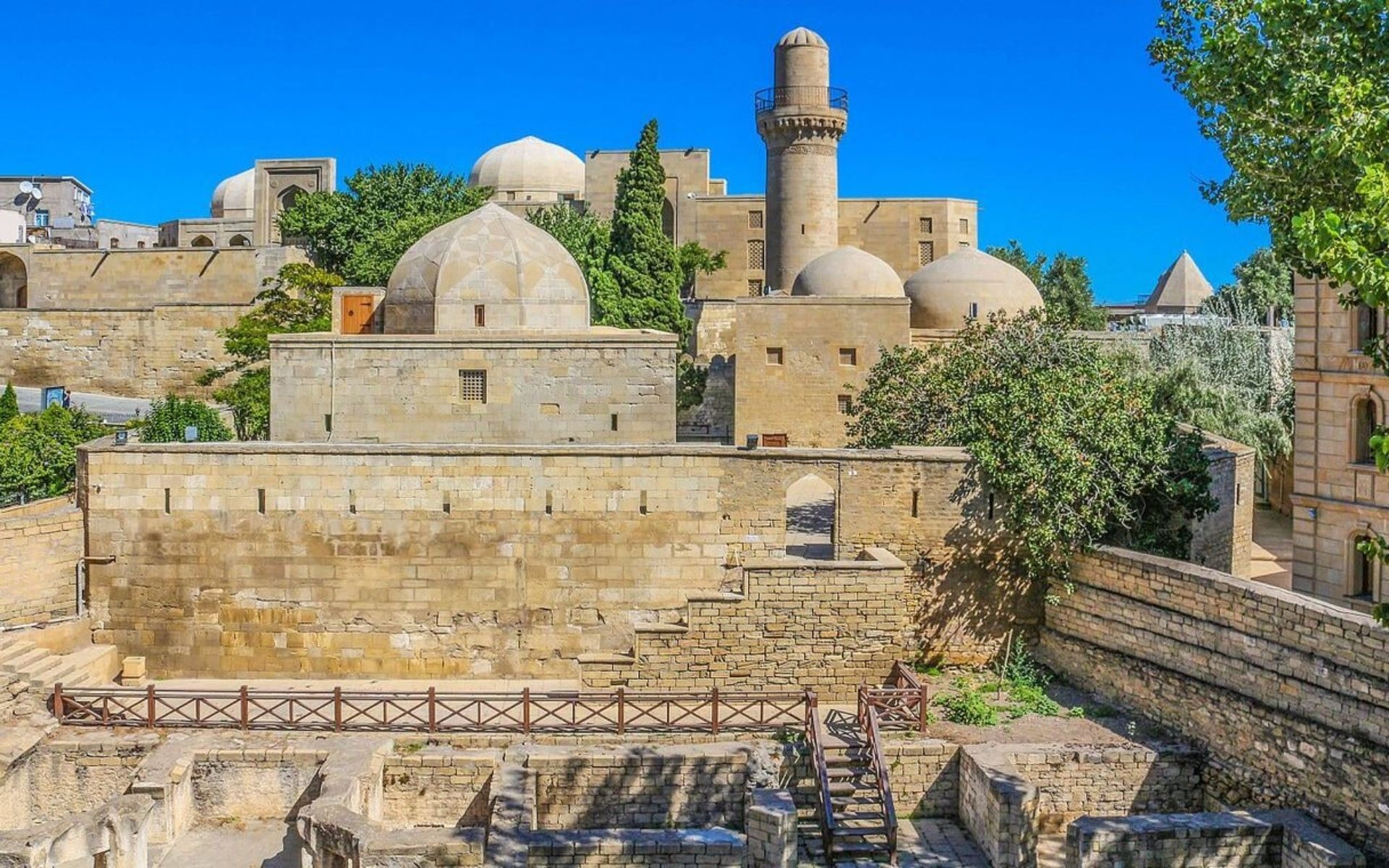
Old City (Icheri Sheher)
The historic core of Baku, a UNESCO World Heritage site with ancient walls, narrow streets, and historic buildings.
Historical
2-3 hours
Free to explore, attractions within have varying costs
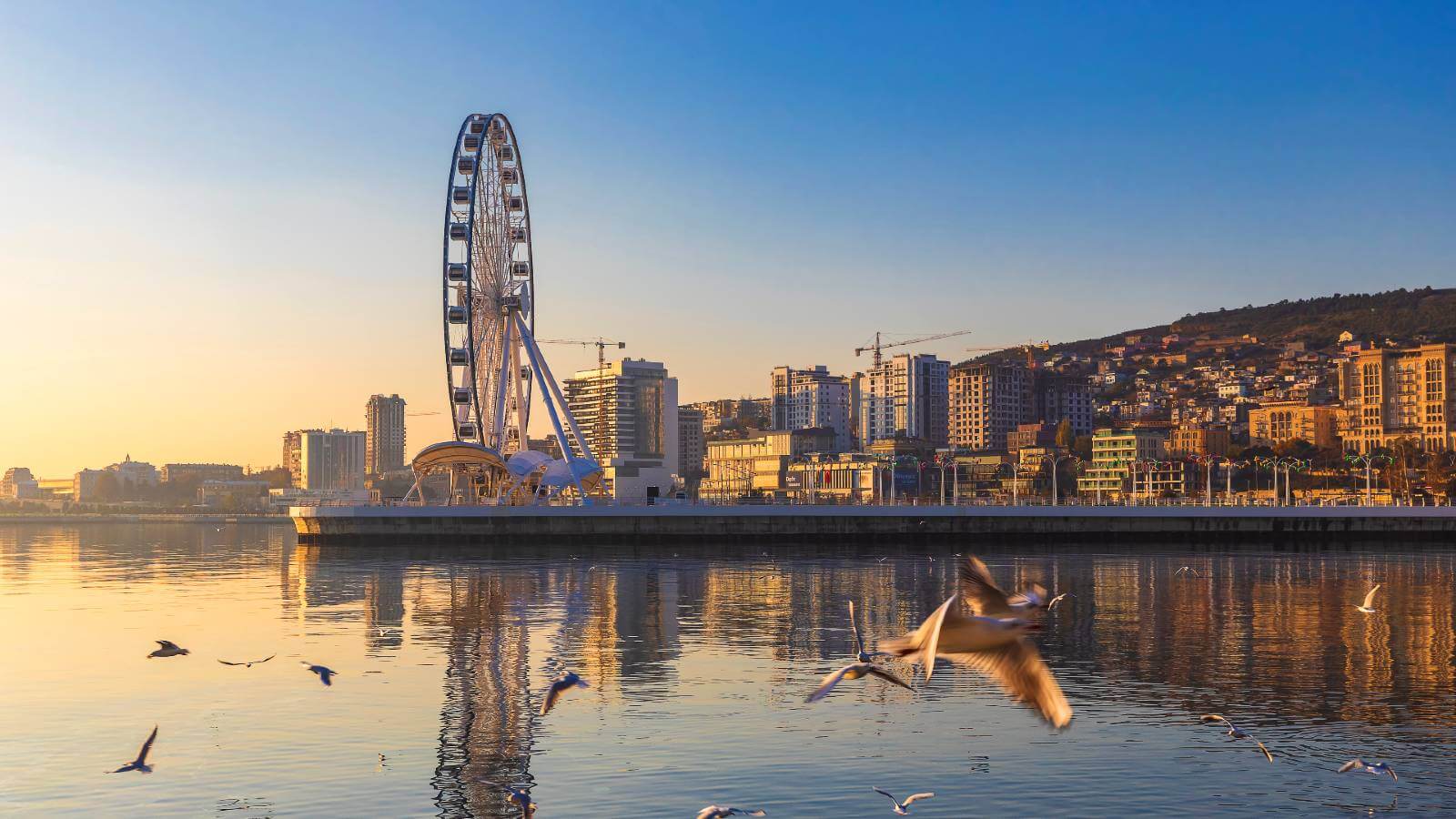
Baku Boulevard
A scenic park along the Caspian Sea with walking paths, cafes, and entertainment options.
Nature
1-2 hours
Free to enter, activities have varying costs
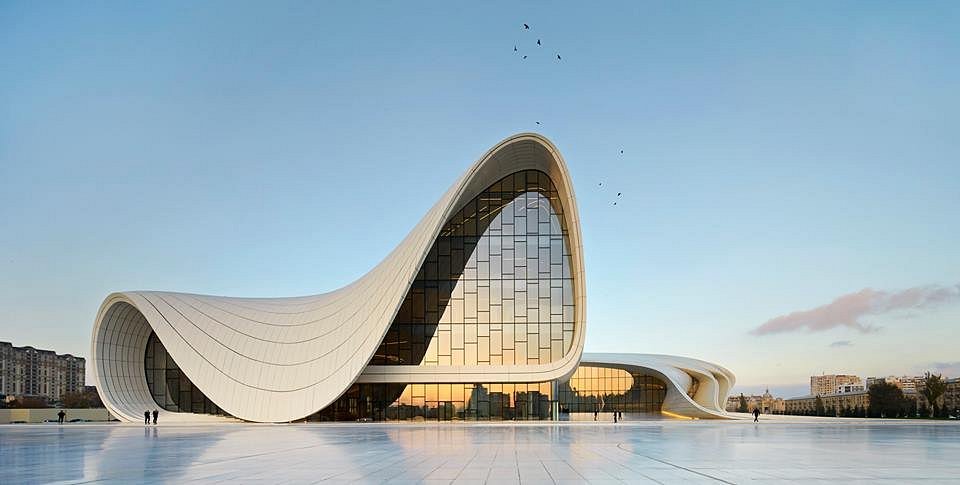
Heydar Aliyev Center
A stunning piece of modern architecture designed by Zaha Hadid. The center hosts exhibitions, concerts, and conferences.
Architecture
1-2 hours
Moderate (depends on the event)
Must-Try Local Dishes
Plov
A fragrant rice dish cooked with saffron, meat, and vegetables. It's often served at special occasions and is considered a national dish.
Main course
Contains meat, can be made vegetarian upon request
Dushbara
Tiny dumplings filled with minced meat and served in a broth. It's a popular street food in Baku.
Soup
Contains meat, can be made vegetarian upon request
Baku Piti
A traditional soup made with lamb, chickpeas, and noodles, served in a clay pot.
Soup
Contains meat, can be made vegetarian upon request
Baku Dolma
Grapes leaves or vegetables stuffed with a mixture of minced meat and rice, cooked in a spicy tomato sauce.
Appetizer
Contains meat, can be made vegetarian upon request
Popular Activities
Hiking in Gobustan National Park
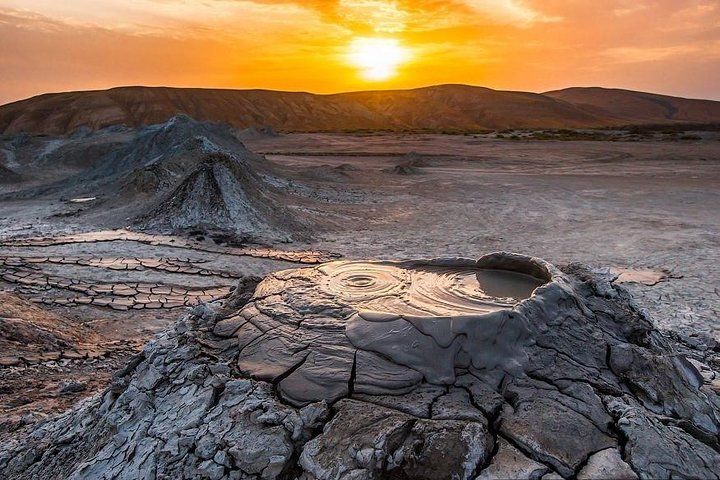
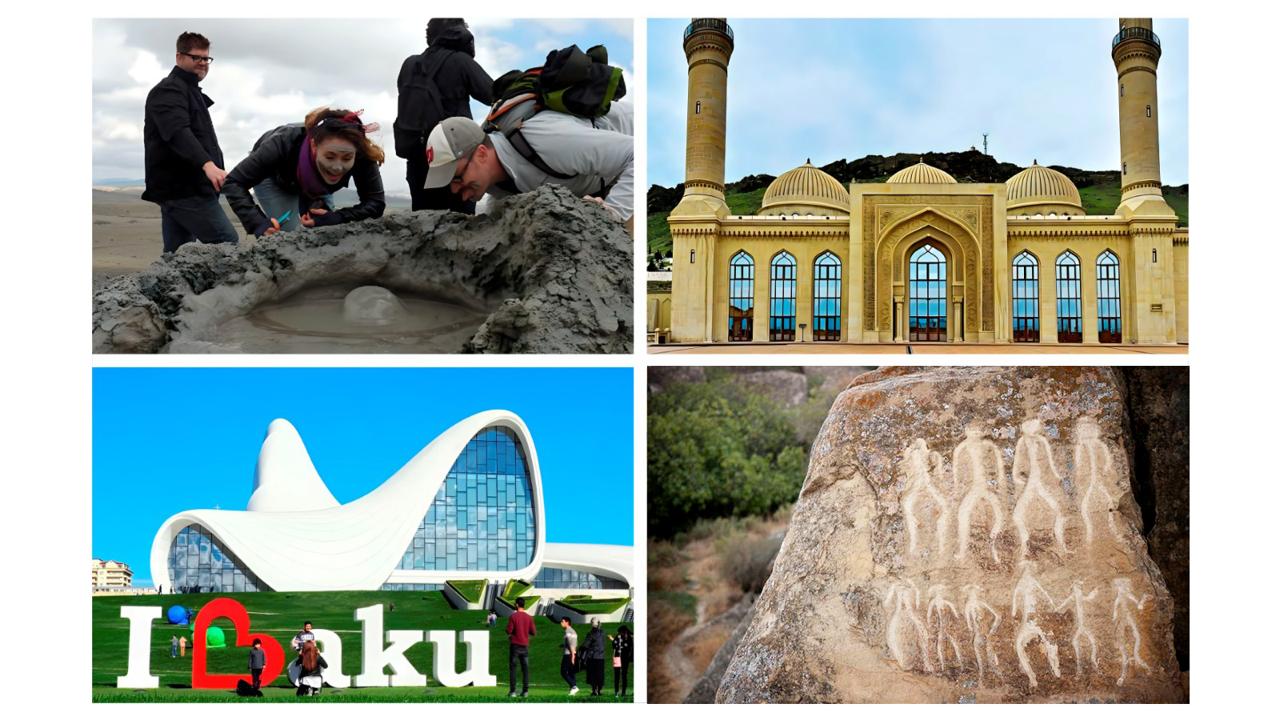
Exploring mud volcanoes
Visiting the Shamakhi Astrophysical Observatory
Strolling along Baku Boulevard
Enjoying a cup of tea in a traditional teahouse
Relaxing at a local hammam (bathhouse)
Exploring the Old City
Visiting museums and historic sites
Best Time to Visit
April to June, September to October
This is the best time to visit Baku with pleasant weather, ideal for sightseeing and outdoor activities. Crowds are moderate, and the city hosts several festivals during these months.
18°C to 28°C
64°F to 82°F
Practical Information
Language
- Official: Azerbaijani
- Widely spoken: Russian, English (in tourist areas)
- English: Moderately spoken in tourist areas, limited elsewhere
Currency
Azerbaijani Manat (AZN)
Time Zone
GMT+4
Electricity
220VV, 50HzHz
Safety Information
Overall Safety Rating: Generally safe
Baku is generally safe for travelers, with low crime rates. However, petty crime like pickpocketing can occur in crowded areas. Exercise caution at night, especially in less touristy areas.
Important Precautions:
- • Keep valuables secure
- • Use official taxis or ride-hailing apps
- • Be cautious of strangers offering help or services
Getting there
By air
- Heydar Aliyev International Airport • 20 km from city center
By train
Baku Railway Station
By bus
Baku International Bus Terminal
Getting around
Public transport
The metro is efficient, clean, and affordable. It's the best way to get around the city quickly.
Taxis
Available • Apps: Bina Taxi, Yandex.Taxi
Rentals
Car, Bike
Neighborhoods
Old City (Icheri Sheher)
Nizami District
Khatai District
Day trips
Gobustan National Park
60 km from Baku • Full day
A UNESCO World Heritage site featuring ancient rock carvings, mud volcanoes, and a unique desert landscape. It's a great place for hiking and exploring.
Lankaran
220 km from Baku • Full day or overnight
A city in southern Azerbaijan known for its lush greenery, historic sites, and the nearby Hirkan National Park. It's a great place for nature lovers and history buffs.
Shamakhi
120 km from Baku • Full day
A historic city known for its ancient Juma Mosque, the Yeddi Gumbaz mausoleums, and the nearby Shamakhi Astrophysical Observatory. It's a great place for history lovers and those interested in astronomy.
Festivals
Baku International Jazz Festival • October
Baku International Film Festival (BAFTA) • October
Novruz Bayrami • March 20-21 (or around the spring equinox)
Pro tips
- Visit the Flame Fountain in Baku Boulevard, a unique attraction where natural gas flames continuously burn from a stone fountain
- Try traditional Azerbaijani tea in a local teahouse, such as Sazaghan Teahouse or Chaykhana #1
- Explore the Old City on foot, taking in the narrow streets, historic sites, and local markets
- Take a day trip to Gobustan National Park to see ancient rock carvings and mud volcanoes
- Visit the Heydar Aliyev Center, a stunning piece of modern architecture designed by Zaha Hadid
From $25
per person
Price varies by option
Secure booking
Free cancellation available
Instant confirmation