Private Guided Tour in Anuradhapura & Optional Tour to Mihintale
Active
6h
For a full refund, cancel at least 24 hours before the scheduled departure time.
Instant confirmation
Mobile or paper ticket accepted
About this experience
Let’s Discover the rich history of ancient Sri Lanka on this immersive tour of Anuradhapura. Begin the journey at the Vessagiriya Forest Monastery, where you’ll delve into the intriguing tales of a civilization unique to this region. Visit iconic sites including the Shri Maha Bodhi Tree, Towering Stupas, and many Grandeur Masterpieces, each offering a glimpse into the grandiloquent history of ancient Sinhalese people. As you explore, gain insights into the cultural significance of these landmarks from your personal guide. This tour is ideal for history enthusiasts and those looking to understand Sri Lanka’s ancient elegance.
- Tour includes visits to key historical sites in Anuradhapura
- Learn about ancient Sri Lankan civilization from an expert guide
- Explore significant landmarks like the Ruwanweliseya Stupa and the Vessagiriya Monastery
- Flexible pick-up options available from bus stations, railway stations, or your hotel
Available options
Guided Tour without Transport
Bottled Water / Refreshments
What's included
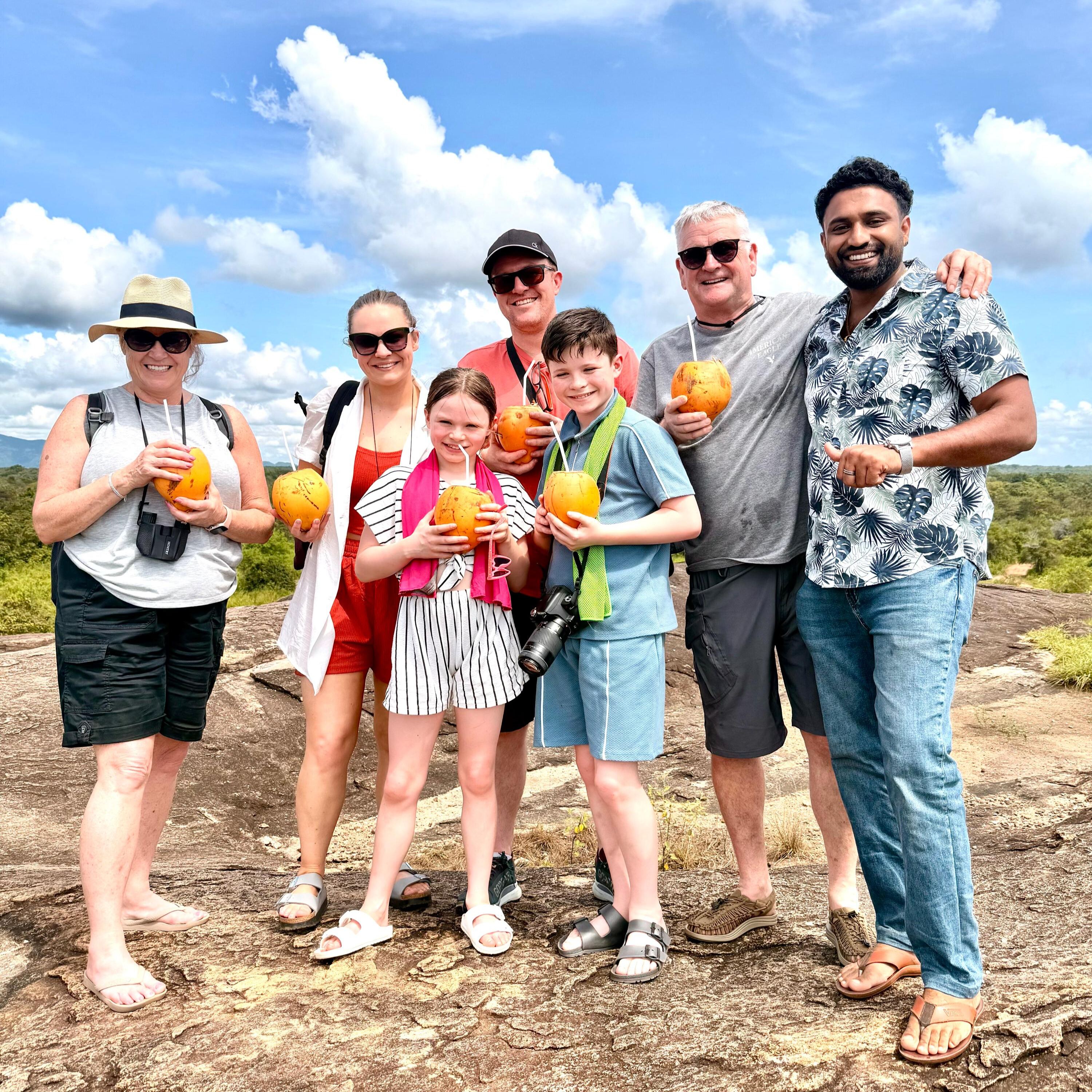
King Coconut
Bottled water
Professional & Licensed Tour Guide
Detailed itinerary
1
Welcome to Rajarata ! (The King’s County or The Land of Kings)
We will commence our day from Vessagiriya Forest Monastery, which is one of the two oldest Buddhist Monks living dwellings in the island.
At Vessagiriya, the guests will start to deep dive into the Ancient Sinhalese Civilization nourished with Buddhism, Agriculture, Fine Arts, Architecture, Trades, International Relations, and Spellbinding Engineering Marvels and there you get an idea of how Anuradhapura looked like in its golden era from its very beginning.
2
Hidden on the side of a boulder face at the Ran Masu Uyana (The Royal Goldfish Park) sandwiched between the Tissa Wewa and the Isurumuniya Rock Temple at Anuradhapura, Sri Lanka is a unique artefact of Ancient Sri Lanka which is locally known as “Bawa Chakraya” or the “Sakwala Chakraya.
3
The Sri Maha Bodhi Tree or The Sacred Bodhi Tree ( A Fig or Pipal Tree scientifically known as the Ficus Religiosa) is regarded as the first of the eight sacred places in Anuradhapura. This is recorded to be the right wing branch of the Sri Maha Bodhi Tree in Bodh Gaya in India under which the Ascetic Siddhartha attained Enlightenment, and was sent by Emperor Ashoka through his beloved daughter, The Buddhist Nun Theri Sanghamitta, on request of Sinhalese King Devanampiyatissa in the 3rd century BCE. From this point onwards it came to be venerated by successive Kings, Monks, Nuns, and the Lay Buddhists since it is a living connection to the Gautama Buddha. Particularly, it is generally accepted that it would be the oldest human planted living tree in the world with the longest written records and at present nearly 2300 years old.
4
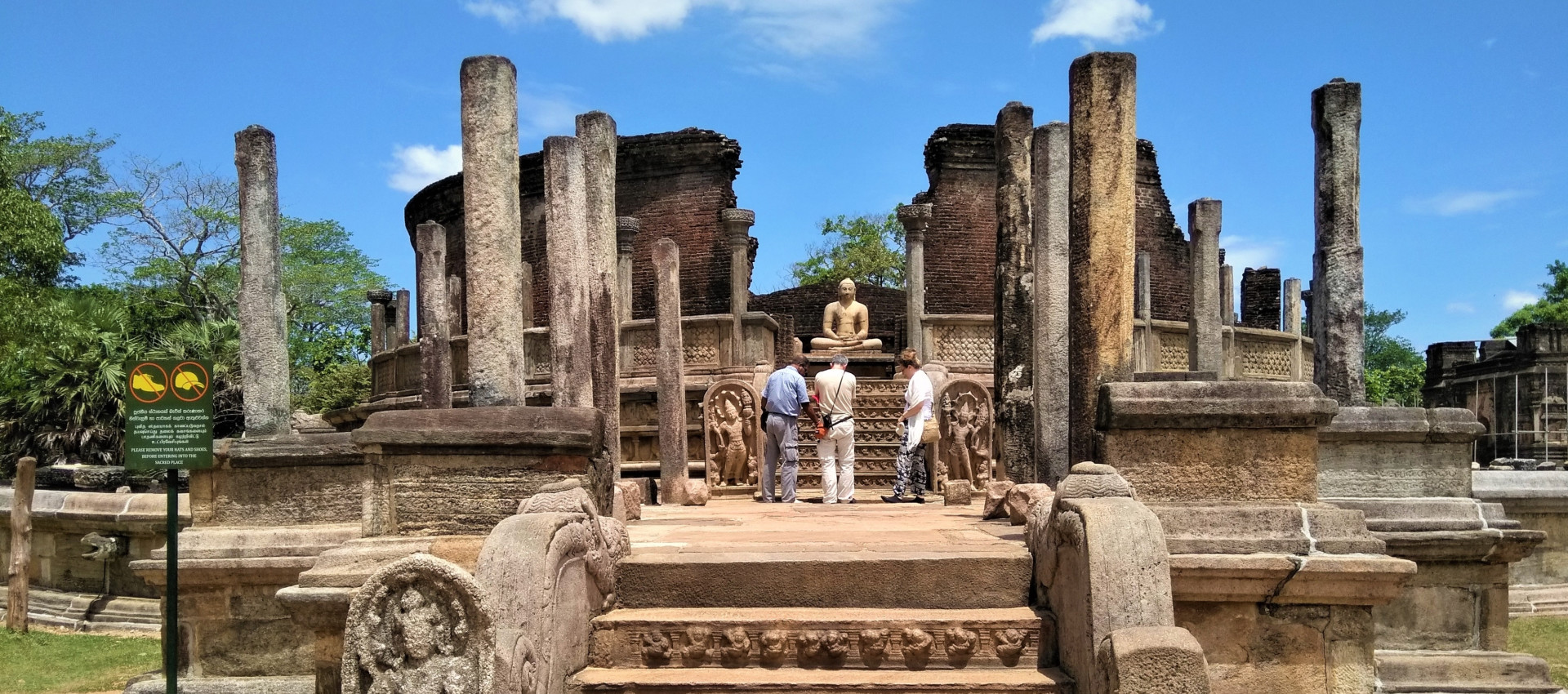
To the north or the Sacred Bodhi Tree, we can witness a huge collection of standing granite pillars which has been identified as the dilapidated building of the ancient Brazen palace which was once served as the administrative Center of the ancient Maha Vihara Monastery Complex constructed under the guidance of Great King Gamini Abhaya in 2nd Century BCE, a grand son of King Devanampiyatissa. It was a nine-storey building with 1000 different chambers. The name, Brazen Palce derives from the fact that its roof was thatched with copper tiles.
5
Stop 5
Ruwanveliseya stupa also known as the Ratnamali or as the Mahathupa ( Th Great Stupa) was constructed under the guidance of Great Kind Gamini Abhaya in the second century BC. The chronicles fantastically describes of the inauguration ceremony of this Stupa as great festival that was held in Anuradhapura with the participation of Invited Guests even from other countries as diplomats. However it was destroyed during Chola Invasion by 10th century AC and was restored the stupa to its original glory in the 12th century AC by King Parakkramabahu the greatest.
Then anyhow what we see today is the most recent restored form which was completed by Ratnamali Stupa Development Society in 1940, what was firstly initiated by Ven. Naranvita Sumanasara Thero in 1873 as he wanted to restore it to its former glory.
6
At the premises of Mahapali Alms Hall, we will witness a collection of ruins of few different buildings, the largest one would be the Mahapali Refectory, where supplied the meals for Buddhist Monks from the royal kitchen. It has been conjectured that the term “Mahapali’ derives from the custom of monks coming for their meals in a long line according to their seniority. The refectory was actually considered as a part of the royal palace itself. A huge Stone-trough seen here served as a receptacle for rice. To the north west, we find another dilapidated building that was the Temple of the sacred tooth relic in ancient times. After The Sacred Tooth Relic of Buddha was brought to Sri Lanka, it was regarded with highest esteem and acquired the status of an important religious and royal symbol. Therefore they housed it safely closer to the Royal Palace. After the Tooth Relic Chamber we move to a little bit far north and you will come across a huge dig which was a recent excavation.
7
This picturesque pair of Ponds built on the low ground are undoubtedly exquisite specimens of land scape architecture and of course a wonderful hydraulic system showing not only the talents but the aesthetic sense of these magnificent people.
8
This is really somthing like a modern steam bath, but this was not merely to enjoy steam bathing with warm water but of a well-developed sinhalese medication which performed in 4th century AC onwards. At there we can discuss how it was functioned and how Sick monks in Abhayagiriya University cured their skin deceases.
9
There we will again see a large granite trough in the shape of canoe stands with an amazing intaglio in the refectory premises of the Abhayagiriya Monastery. The Chinese monk Fa-hsien who was studying at the Abhayagiriya University in 5th Century AC recorded that there were 5000 Buddhist monks in the Monastery and this particular trough could hold sufficient rice for such a number.
10
This is one of the finest works of art in Sri Lanka dates back to about the 8th Century AC. And this masterpiece is preciously showcasing the aesthetic sense of the ancient craftsmen and how incredibly they have put their knowledge, ability, talents, feelings into practice.
11
This is popularly known as the Eth-Pokuna to the locals or the Elephant Pond in English, situated to south-west of the Refectory is perhaps the largest Man made pond in the Asia that was built in the 3rd century AC. It is said that this is three times bigger than a modern day Olympic swimming pool. The miracle here is not only its enormous size but the underground conduits which still functions and have been supplying water to the pond from nearby reservoirs and in the south west corner we can note a cistern sluice which suggests that water was distributed to other relatively smaller ponds in the vicinity depicting the superb hydraulic engineering skills of the ancient Sinhalese.
12
The moonstone is another most beautiful and breathtaking creation of the ancient sculptor. It serves as a doormat at the foot of a flight of steps to a Buddhist shrine, but the sculptor transforms it into a work of art far excellence.
What's not included
Entry Admission to UNESCO World Heritage Sites
Private transportation
Available languages
Guide guide
EN
Written guide
EN
Reviews breakdown
Viator
5.0
4 reviews
5★
4
4★
0
3★
0
2★
0
1★
0
Tripadvisor
5.0
45 reviews
5★
44
4★
1
3★
0
2★
0
1★
0
Important information
Public transportation options are available nearby
Infants are required to sit on an adult’s lap
Not recommended for travelers with poor cardiovascular health
Suitable for all physical fitness levels
Meeting point
Your Guide will be there to welcome you at the meeting point with a paging board.
About Anuradhapura
Anuradhapura is a major city in Sri Lanka, famous for its well-preserved ruins of an ancient Sri Lankan civilization. It is one of the oldest continuously inhabited cities in the world and a UNESCO World Heritage Site. The city is a pilgrimage site for Buddhists and offers a rich cultural and historical experience.
Top Attractions
Sacred City of Anuradhapura
A UNESCO World Heritage Site, the Sacred City of Anuradhapura is home to ancient stupas, temples, and ruins that date back over 2,000 years.
Historical
Full day
Free
Ruwanwelisaya Dagoba
One of the tallest stupas in the world, this iconic structure is a significant pilgrimage site for Buddhists.
Religious
1-2 hours
Free
Sri Maha Bodhi
A sacred fig tree that is said to have been propagated from the original Bodhi tree under which Buddha attained enlightenment.
Religious
30 minutes to 1 hour
Free
Jethawanaramaya Dagoba
The tallest stupa in Anuradhapura, known for its impressive size and historical significance.
Historical
1 hour
Free
Isurumuniya Temple
A beautiful temple known for its rock carvings and serene atmosphere.
Religious
1-2 hours
Free
Must-Try Local Dishes
Kottu Roti
A popular Sri Lankan dish made with chopped roti, vegetables, and meat or seafood, cooked on a hot plate.
Dinner
Can be made vegetarian or vegan.
Hoppers
Bowl-shaped pancakes made from fermented rice flour and coconut milk, often served with eggs or sambal.
Breakfast
Vegetarian.
Rice and Curry
A staple Sri Lankan meal consisting of steamed rice served with a variety of curries.
Lunch/Dinner
Can be made vegetarian or vegan.
Lamprais
A Dutch-influenced dish consisting of rice, meat, and vegetables cooked in banana leaves.
Lunch/Dinner
Contains meat.
Popular Activities
Hiking in Mihintale
Exploring Ritigala Forest Monastery
Tea tasting
Visiting temples
Exploring ancient ruins
Attending religious ceremonies
Witnessing the Esala Perahera festival
Best Time to Visit
January to March
This is the best time to visit Anuradhapura as the weather is pleasant and dry, making it ideal for exploring the ancient ruins and enjoying outdoor activities.
28-32°C
82-90°F
Practical Information
Language
- Official: Sinhala, Tamil
- Widely spoken: English
- English: Moderately spoken
Currency
Sri Lankan Rupee (LKR)
Time Zone
UTC+5:30
Electricity
230VV, 50HzHz
Safety Information
Overall Safety Rating: Generally safe
Anuradhapura is generally safe for travelers, but standard precautions should be taken to avoid petty theft and scams.
Important Precautions:
- • Keep valuables secure.
- • Use reputable tour operators.
- • Be cautious of strangers offering unsolicited help.
Getting there
By air
- Colombo Bandaranaike International Airport • 200 km
By train
Anuradhapura Railway Station
By bus
Anuradhapura Bus Stand
Getting around
Public transport
Buses are the most common form of public transport and cover most areas of the city.
Taxis
Available • Apps: PickMe, Uber
Rentals
Car, Bike, Scooter
Neighborhoods
Sacred City
New Town
Tuktukaraya
Day trips
Mihintale
12 km • Half day
A sacred mountain site where Buddhism was first introduced to Sri Lanka, featuring ancient ruins and temples.
Ritigala Forest Monastery
30 km • Full day
A UNESCO-listed forest monastery with ancient ruins and a rich biodiversity.
Avukana Buddha Statue
50 km • Full day
A colossal Buddha statue carved out of a single rock, standing 40 feet tall.
Festivals
Esala Perahera • July/August (full moon day)
Poson Festival • June (full moon day)
Vesak Festival • April/May (full moon day)
Pro tips
- Visit the Sacred City early in the morning to avoid the heat and crowds.
- Hire a local guide for a more in-depth understanding of the historical sites.
- Try local street food for an authentic culinary experience.
- Respect the religious customs and traditions when visiting temples.
- Carry a water bottle and sunscreen to stay hydrated and protected from the sun.
Get Price
per person
Price varies by option
Secure booking
Free cancellation available
Instant confirmation


![Minneriya National Park Safari [private , full package]](https://media-cdn.tripadvisor.com/media/attractions-splice-spp-674x446/15/1f/89/35.jpg)


![Habarana Eco Park Jeep Safari [private,full package]](https://media-cdn.tripadvisor.com/media/attractions-splice-spp-674x446/17/05/ad/af.jpg)