Coimbra Audio Guided Walking Tour 2h25 and 25 Audio Comments
Active
2h
For a full refund, cancel at least 24 hours before the scheduled departure time.
Instant confirmation
Mobile or paper ticket accepted
About this experience
Coimbra, the jewel of Portugal, invites you to explore its 25 iconic sites in one day. Stroll through its picturesque streets, admire the UNESCO World Heritage University of Coimbra, and discover treasures like the Jardim Botânico and the Fado de Coimbra. This walking tour plunges you into the heart of history and culture, with must-see stops that tell the rich tradition of this city. Ideal for history lovers, families and students, this route guarantees you a total immersion in the Coimbrian universe.
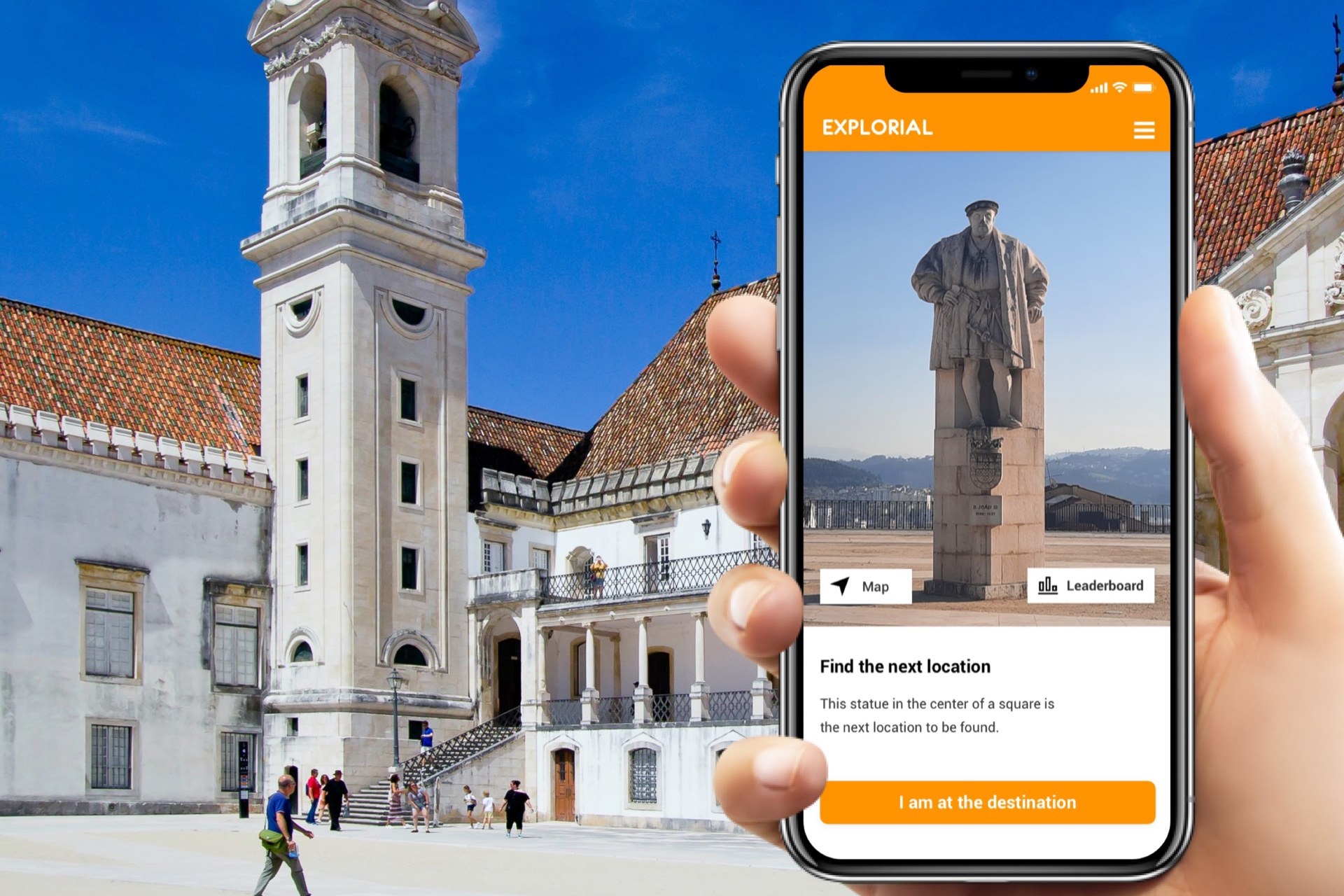
- Circuit of 6 km, to be covered in 2h25.
Visit historical sites such as the Sé Velha and the Monastery of Santa Clara-a-Velha.
- Take advantage of the audio guide to discover local anecdotes and stories.
- Accessible to all, perfect for families and culture lovers.
Available options
Audio guided circuit
What's included
Recommendations for the best photo opportunities
Immediate access to the audioguided circuit, no tickets or materials to collect
Offline mode (no data consumption during the visit)
3 languages available: French, English, Spanish
25 immersive audio comments along the way (History...)
Text transcripts of all audio content
Admire the hidden gems that lie off the beaten track
Interactive navigation with 3D map to discover the most beautiful streets,...
Detailed itinerary
1
Figure of another time, the Tricana de Coimbra is the emblematic feminine image of the city.
2
Here we are, right in front of one of the most expressive and oldest testimonies of Romanesque art in Portugal.
3
You can barely see it in our path, yet the Machado de Castro National Museum is one of the most important art institutions in the whole country.
4
Let it be clear between us, just because we call it nova, or “new” in French, does not mean that this religious building does not have much to teach us.
5
Without even going further, we can already see between the foliage and the passing cars, the imposing silhouette of the aqueduct of São Sebastião.
6
Often cited in the family of the most beautiful gardens in the world, the Jardim Botânico was founded in 1774, at the request of the Marquis de Pombal.
7
Clinging to a hill, overlooking the Rio Mondego, Coimbra is the festive and popular mood of its Baixa, the erudite and ancestral temperament of its Alta, but also the romance and holiness of its Santa Clara neighborhood.
8
Anyone visiting Coimbra, can not miss a stop at this special place. The University of Coimbra is a living testament to the best that Portugal has to offer in science, arts and culture.
9
If the University of Coimbra has a reputation without borders, it is obviously due to its image as a citadel of knowledge, but not only.
10
Almost at the end of the route on Coimbra, from the Serra da Estrela where it originates, the Rio Mondego is the longest 100% Portuguese river.
11
Although most of the abbeys were abandoned, after the disappearance of the various religious orders, the monastery of Santa Clara-a-Velha is still in place.
12
By definition dedicated to children, Portugal dos Pequenitos, or the “Portugal of the very small”, placed on your left, is the oldest theme park in the country.
13
Perched on the heights of the Santa Clara district, the monastery of Santa Clara-a-Nova was built between 1648 and 1696, in order to replace that of Santa Clara-a-Velha, which was hit several times by the floods of the Rio Mondego.
14
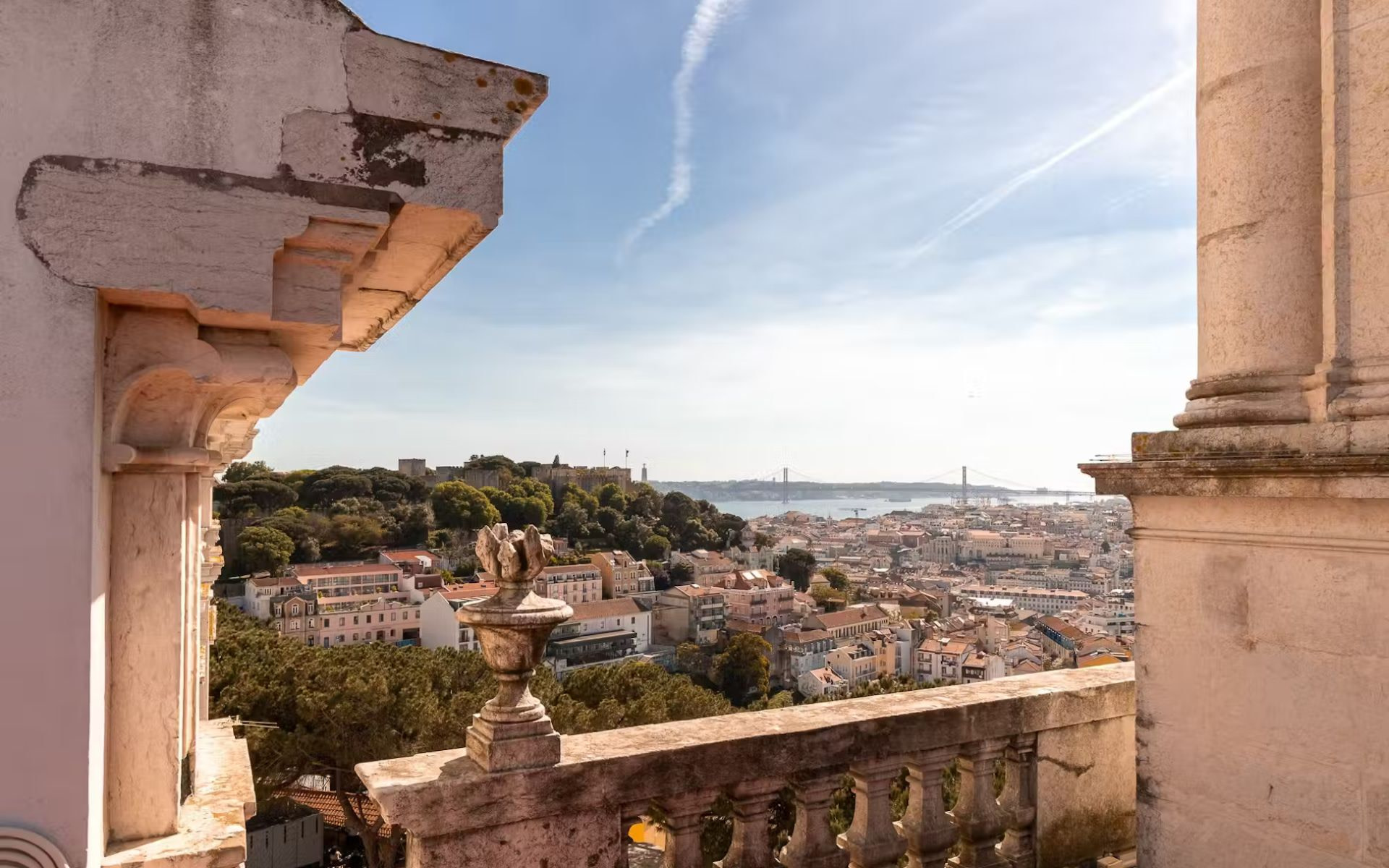
Oh, there, but what a magical place! It is perfectly located on the slopes of the Santa Clara district that this miradouro, or lookout, if translated into the language of Molière, reveals itself in grace and perspective.
15
When we try to connect music to Portugal, 4 letters are jostled in our head, before being pronounced on the tips of our lips. Together, they say the word Fado.
16
Here you are at the gates of Rua Ferreira Borges! True to the same route since medieval times, this artery is one of the liveliest in the neighborhood.
17
Slided or even hidden between two buildings on your right, the Porta da Barbacã is a precious witness to the second fortified enclosure of Coimbra.
18
We need no more than a quick look at Praça do Comércio to see that the church of São Tiago is the historical reference of the surroundings.
19
Although the historic center extends over almost the entire city, Coimbra is composed of two bordering geographical areas, with distinct morphology and history.
20
Added to Café Majestic in Porto, and Café Brasileira in Lisbon, Café Santa Cruz de Coimbra caps off the trio of the most beautiful cafés in the country.
21
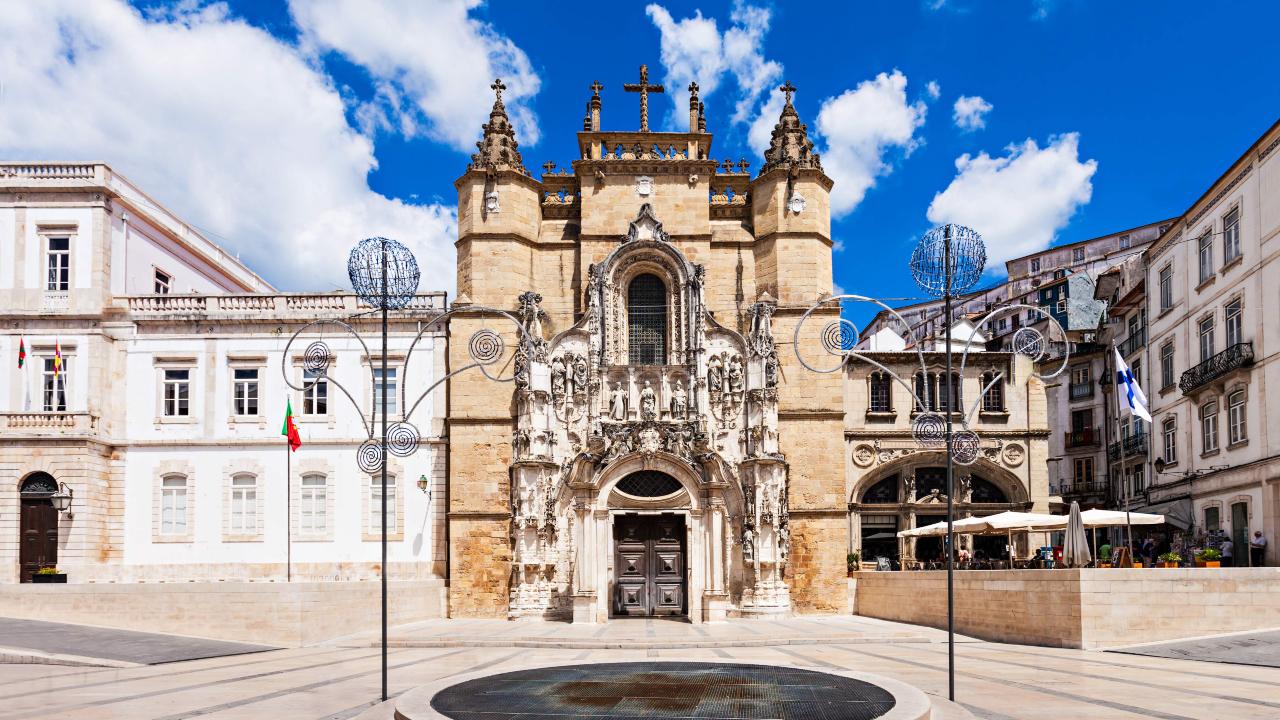
Perfectly integrated into the chromatic and architectural patchwork of the square, on which it stands, the Mosteiro de Santa Cruz is one of the oldest and most important monuments in Coimbra.
22
This is where we stop friends, near the Jardim da Manga, which emerges on our way as a kind of enchanted place.
23
Perched in a favorable position at 160 meters of altitude, the Alta de Coimbra is the second face of the city.
24
With its squat and ancient appearance, it is easy to believe that the Torre de Anto was initially among the highest points of the medieval enclosure of Coimbra.
25
Barely the arch crossed, that we are pleasantly surprised by this portal with a rich naturalist decoration, so attached to the Manueline architectural style.
What's not included
Entrance fees to paid establishments along the route...
Headphones or headphones (optional)
Available languages
Audio guide
EN
FR
ES
Important information
Service animals allowed
Public transportation options are available nearby
Suitable for all physical fitness levels
Meeting point
We build your tours in the form of a loop so that you can easily start the tour at the point closest to you, the guidance will adapt automatically. If you are nearby, we recommend this ideal Check-out Point.
Important notes
Activating your audio-guided circuit:
1. Download the INWAY mobile app from your App Store or directly via this link: in-way.fr/app
2. Open the application and enter your code to unlock the circuit: COI06542
We build our circuits in the form of a loop so that you can easily start the tour at the point closest to you, the guidance will adapt automatically. If you are nearby, we recommend an ideal Check-out Point: At the entrance to Santa Clara Bridge, on the Avenida de Conimbriga side.
About Coimbra
Coimbra, known as the City of Students, is a historic city in central Portugal with a rich academic tradition. It's home to one of the oldest universities in the world, the University of Coimbra, and is famous for its well-preserved medieval architecture, vibrant student life, and cultural heritage.
Top Attractions
University of Coimbra
One of the oldest universities in the world, the University of Coimbra is a UNESCO World Heritage site with stunning architecture and a rich history.
Historical
2-3 hours
€12 (general admission)
Coimbra Cathedral (Sé Velha)
This Romanesque cathedral is one of the most important religious buildings in Portugal, featuring beautiful architecture and historical artifacts.
Religious
1-2 hours
€3 (general admission)
Monastery of Santa Clara-a-Velha
A ruined monastery that was once the home of Queen Saint Isabel, offering a glimpse into the city's medieval past.
Historical
1-2 hours
€4 (general admission)
Botanical Garden of the University of Coimbra
A beautiful and serene garden with a diverse collection of plants, perfect for a relaxing stroll.
Nature
1 hour
Free (with University of Coimbra ticket)
Portugal dos Pequenitos
A miniature park featuring scaled-down replicas of famous Portuguese monuments and buildings, ideal for families and children.
Cultural
1-2 hours
€7 (general admission)
Must-Try Local Dishes
Cozido à Portuguesa
A hearty stew made with various meats, vegetables, and beans, cooked slowly in a clay pot.
Dinner
Contains meat and beans
Bacalhau à Brás
A popular dish made with shredded salted cod, onions, potatoes, and eggs.
Dinner
Contains fish and eggs
Leitão à Bairrada
Roast suckling pig, a specialty of the Bairrada region, served with a crispy skin and tender meat.
Dinner
Contains pork
Pastel de Tentúgal
A traditional pastry from the Tentúgal region, filled with sweet cream and topped with cinnamon.
Dessert
Contains dairy and sugar
Popular Activities
Hiking in Bussaco Forest
Kayaking on the Mondego River
Visiting thermal spas in Luso
Strolling along the Mondego River
Exploring the University of Coimbra
Visiting the Coimbra Cathedral (Sé Velha)
Swimming at nearby beaches
Visiting the Festa das Latas (Bottle Caps Festival)
Best Time to Visit
May to September
This is the best time to visit Coimbra for pleasant weather and outdoor activities. The city is lively with students and tourists.
15°C to 30°C
59°F to 86°F
Practical Information
Language
- Official: Portuguese
- Widely spoken: English, French, Spanish
- English: Moderately spoken
Currency
Euro (EUR)
Time Zone
GMT+1 (Western European Time)
Electricity
230VV, 50HzHz
Safety Information
Overall Safety Rating: Generally safe
Coimbra is generally a safe city for travelers, with low crime rates. However, as with any destination, it's important to be aware of your surroundings and take precautions to protect your belongings.
Important Precautions:
- • Keep valuables secure
- • Be cautious of your surroundings, especially at night
- • Use licensed taxis or ride-sharing apps
Getting there
By air
- Francisco de Sa Carneiro Airport • 110 km from Coimbra
By train
Coimbra-B Station, Coimbra A Station
By bus
Coimbra Bus Terminal
Getting around
Public transport
The bus system is efficient and covers most parts of the city.
Taxis
Available • Apps: Bolt, FreeNow
Rentals
Car, Bike, Scooter
Neighborhoods
Alta
Baixa
Sé Nova
Day trips
Conímbriga
15 km from Coimbra • Half day
Conímbriga is a well-preserved Roman settlement with impressive mosaics, ruins, and a museum.
Luso and Bussaco Forest
20 km from Coimbra • Full day
Luso is a charming spa town known for its thermal waters, while Bussaco Forest offers beautiful hiking trails and a historic palace.
Aveiro
60 km from Coimbra • Full day
Aveiro is a charming coastal city known as the 'Venice of Portugal' for its canals and colorful moliceiro boats.
Festivals
Queima das Fitas (Ribbon Burning Festival) • Late May
Festa das Latas (Bottle Caps Festival) • December
Pro tips
- Visit the University of Coimbra early in the morning or late in the afternoon to avoid crowds and enjoy a more peaceful experience
- Try local specialties, such as Cozido à Portuguesa, Bacalhau à Brás, and Pastel de Tentúgal, at iconic eateries like O Sucesso, Zé Manel dos Frangos, and Café Santa Cruz
- Explore the city's neighborhoods, such as Alta, Baixa, and Sé Nova, to discover hidden gems, local shops, and cultural sites
- Take a day trip to Conímbriga, Luso and Bussaco Forest, or Aveiro to experience the region's history, nature, and unique culture
- Attend a Fado performance at the University of Coimbra for a traditional Portuguese music experience
Get Price
per person
Price varies by option
Secure booking
Free cancellation available
Instant confirmation