Nantes Audioguided Walking Tour 2h30 and 30 Audio Commentaries
Active
2h
For a full refund, cancel at least 24 hours before the scheduled departure time.
Instant confirmation
Mobile or paper ticket accepted
About this experience
Nantes, a city rich in history and culture, awaits you for a day of discovery. Discover its treasures, such as the Castle of the Dukes of Brittany, the majestic Cathedral of St. Peter and St. Paul and the famous Passage Pommeraye. Stroll through the Bouffay district and admire contemporary artwork on the green line that runs through the city. Enjoy audio guides to enrich your journey with fascinating anecdotes about each place. Whether you’re a history lover or a food lover, Nantes has something to offer everyone.
- Explore 30 iconic places on foot in Nantes
- Audio guides available for total immersion in history
- Itinerary of 6.4 km, perfect for an active day
- Discover vibrant neighborhoods and local specialties every step of the way
Available options
Audio guided circuit
What's included
Recommendations for the best photo opportunities
30 immersive audio comments along the way (History...)
Immediate access to the audioguided circuit, no tickets or materials to collect
Offline mode (no data consumption during the visit)
3 languages available: French, English, Spanish
Text transcripts of all audio content
Admire the hidden gems that lie off the beaten track
Interactive navigation with 3D map to discover the most beautiful streets,...
Detailed itinerary
1
Here you see a beautiful bronze statue of a naked woman, wielding a sword towards the sky, her face turned towards the light. You only have to look at it to feel the explosion of mixed feelings that our ancestors had to live with the declaration of the armistice in 1918.
2
Stop 2
Pass by
You arrive in front of Marshal Foch Square named in honor of the Commander-in-Chief of the Allied Forces, at the end of the First World War.
3
As you approach the back of the cathedral, you come across the best preserved vestige of the medieval era of Nantes. This is the Porte Saint-Pierre, which allowed to pass the city walls.
4
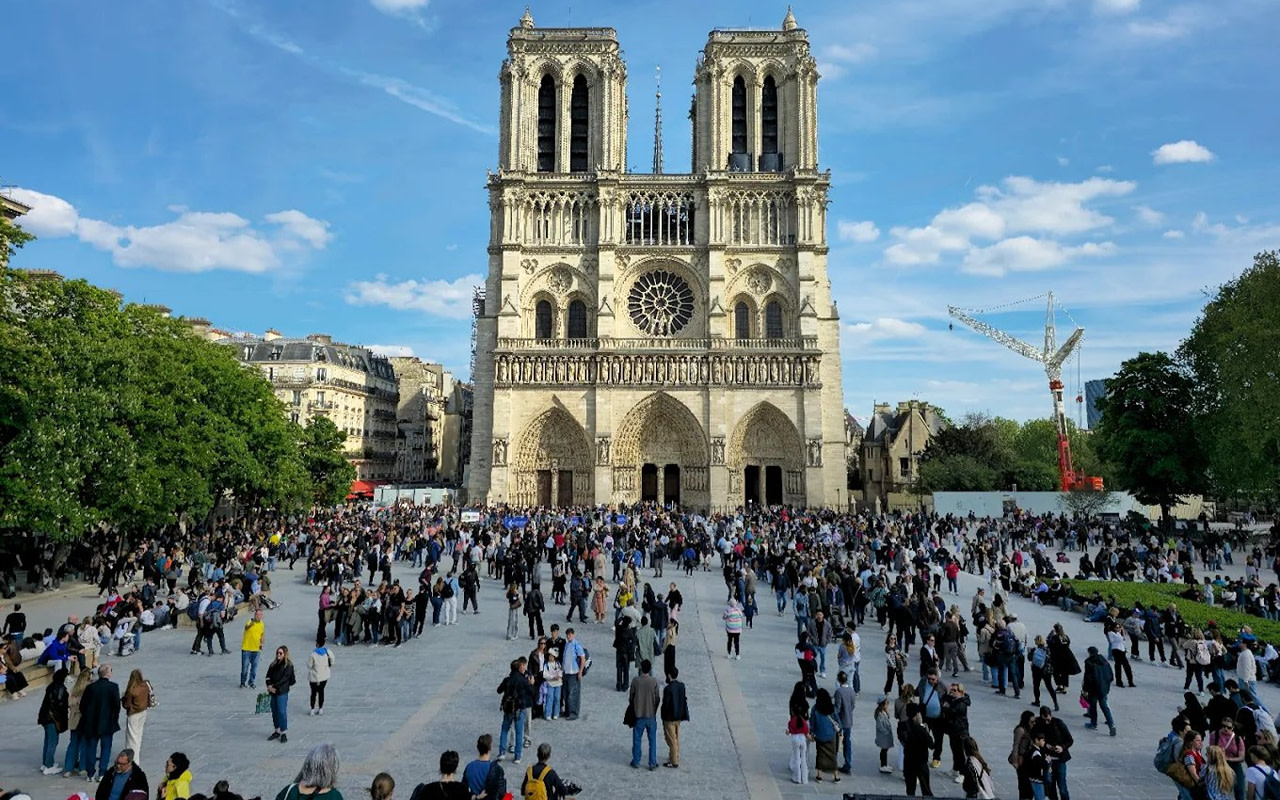
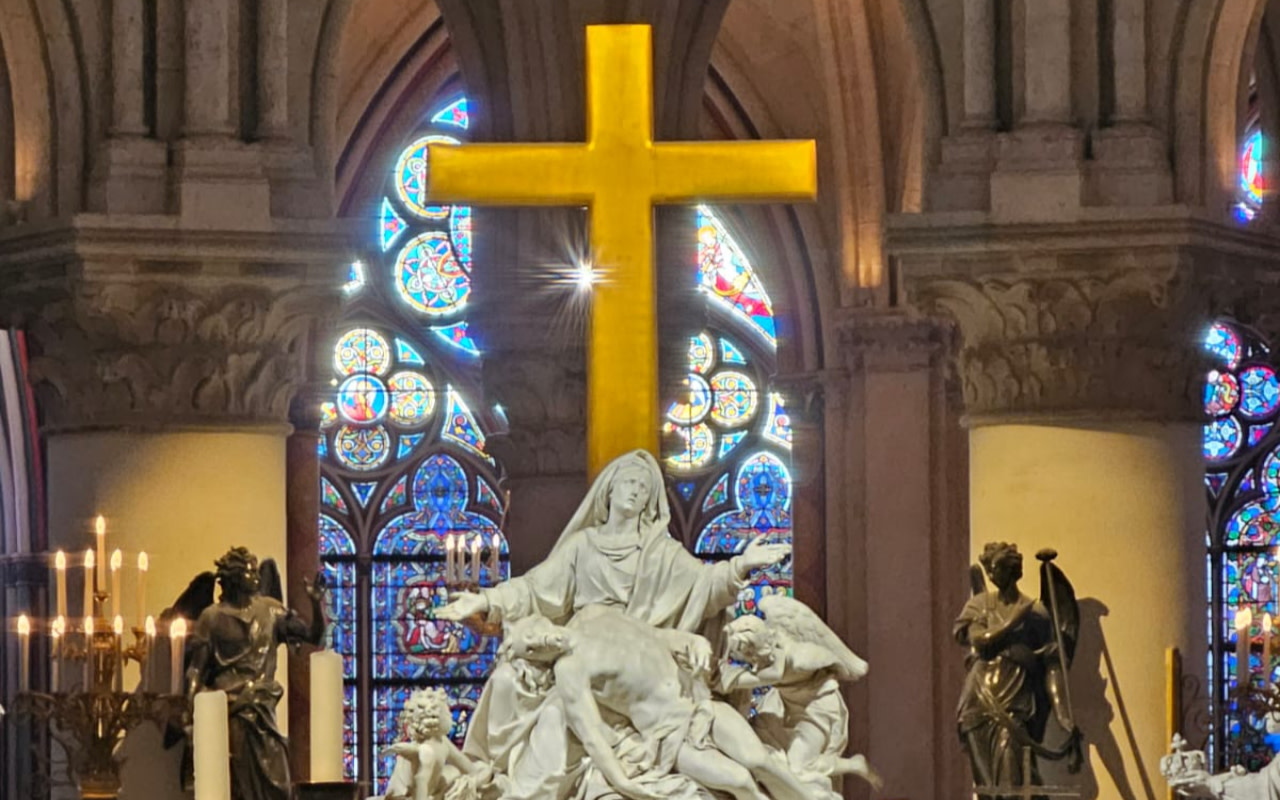
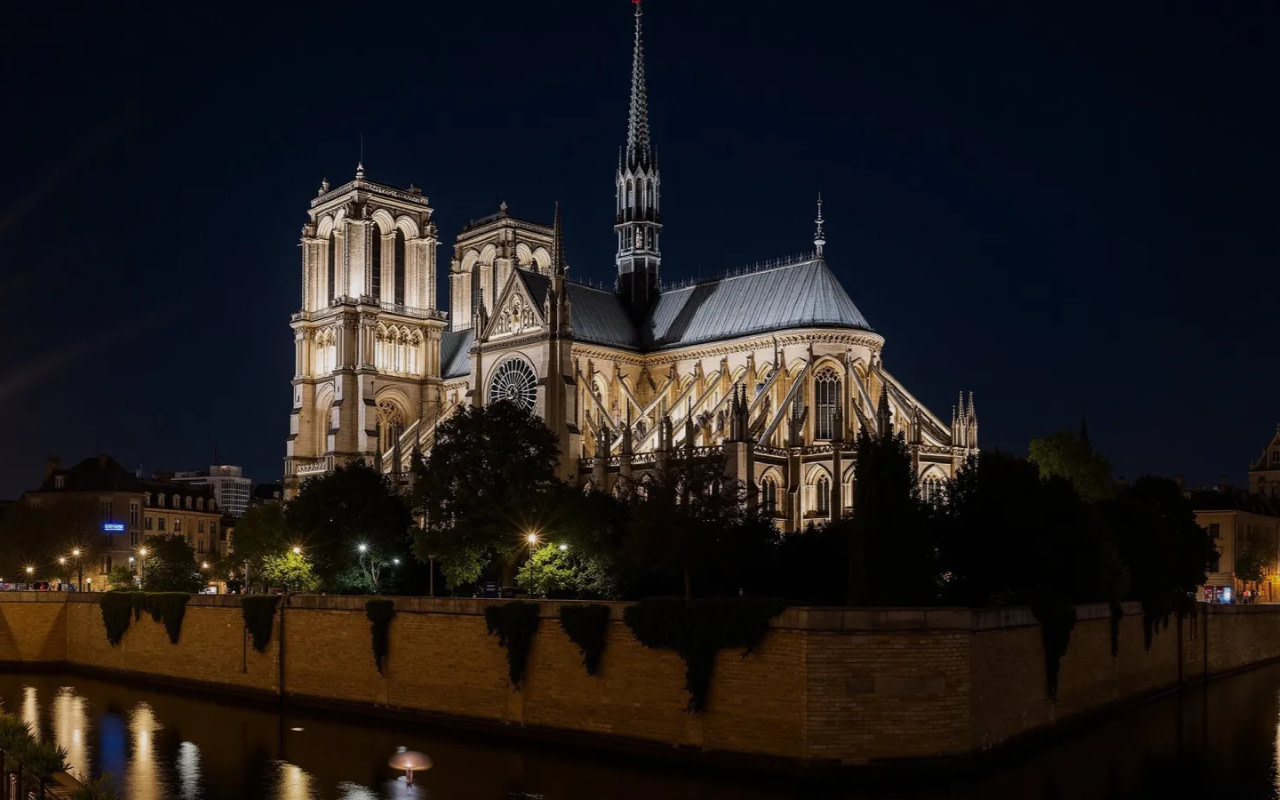
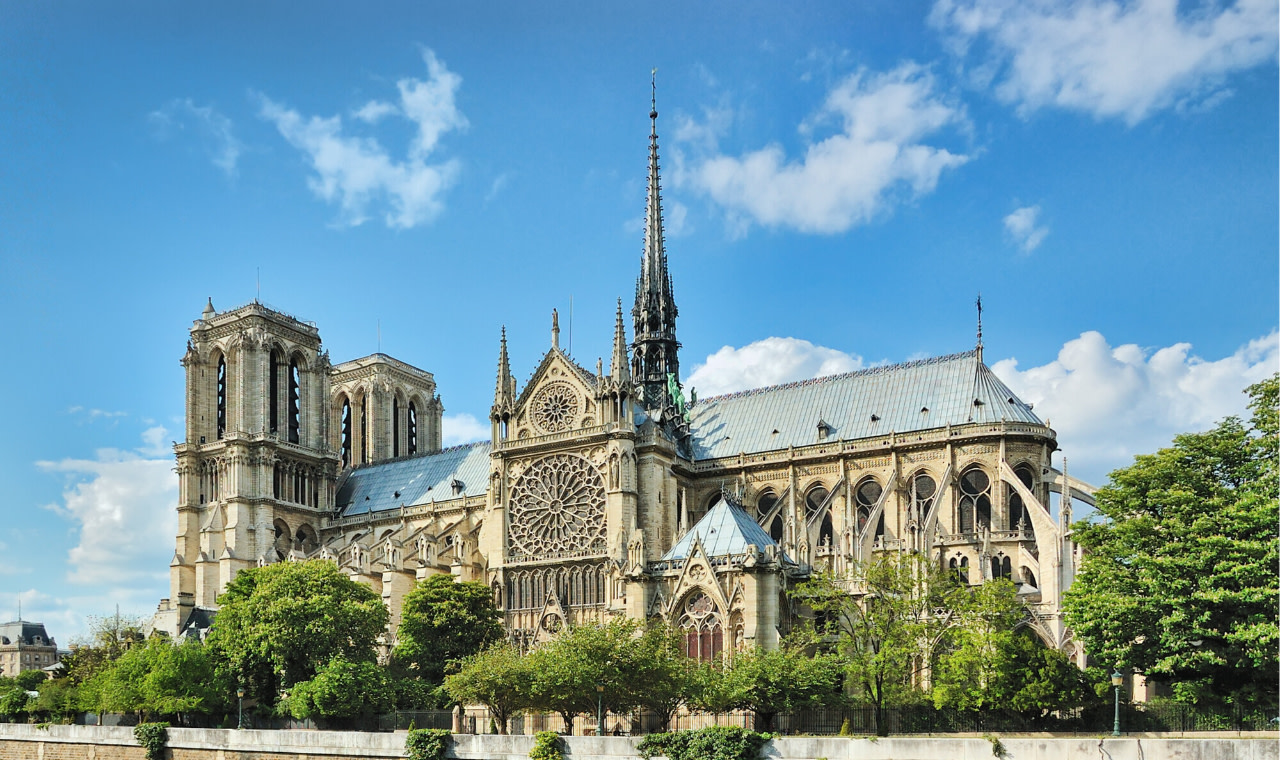
You are now in St. Peter's Square facing St. Peter and St. Paul Cathedral. About the size of Notre-Dame de Paris, it was also affected by a major fire in 2020
5
Stop 5
Pass by
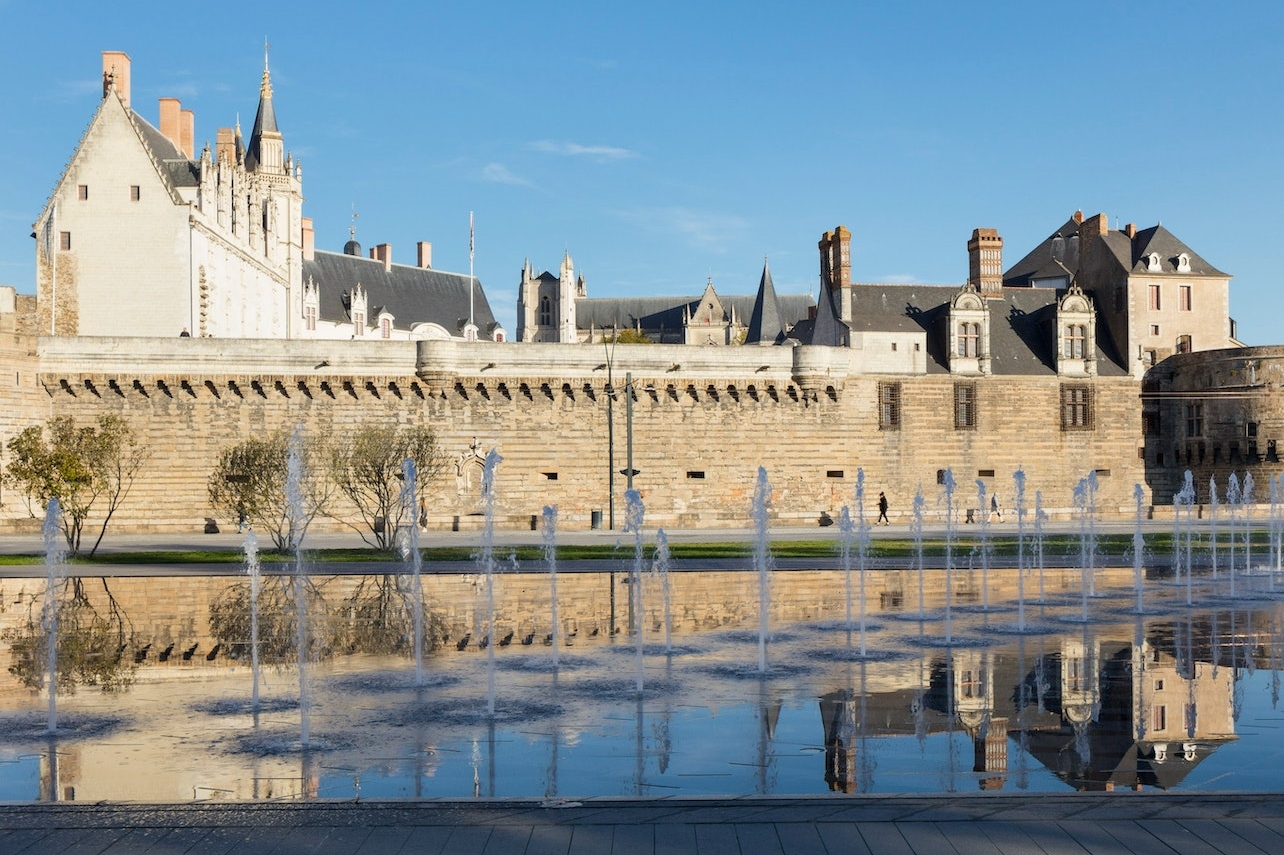
In the heart of medieval Nantes, the castle of the Dukes of Brittany welcomes you in the part of the ramparts, the courtyard and the moat for a jump in time and through history.
6
From the castle walls, you can see, on the quay in front of you, the beautiful tower with a blue and gold dome, belonging to the former factory of the famous biscuit factory Lefèvre-Utile, I named “LU” and its timeless little butter.
7
Stop 7
Pass by
You now enter the Rue de la Juiverie, which, as its name suggests, was the area where the Jewish community of Nantes lived in the Middle Ages. A Jewish presence has been attested since Roman times.
8
You arrive at the forecourt of the beautiful Sainte-Croix church, elegantly set in the heart of the Bouffay district, of which it has been the parish since the 12th century. Its harmonious white façade is Jesuit style, an artistic trend born of the Catholic Counter-Reformation, and close to Baroque art.
9
Stop 9
Pass by
The Bouffay district is the Nantes life par excellence! And it’s not a long time since it’s here that the Namnetes created their Celtic city. It is known that the village had a beautiful bronze industry and that tools, wheat, hemp were exchanged there for amphorae, carpets, oils and jewelry.
10
Stop 10
Pass by
Let’s follow this green line for a moment that you certainly saw several times during your visit. Nantes has so many nuggets to discover that the municipality has made your life easier, by drawing a 12 km green line on the ground, traveling through every corner of the city in search of its heritage old as new.
11
Stop 11
Pass by
You cross Kervégan Street, the main artery of the old island of Feydeau. It was at the base separated from the city of Nantes by branches of the Loire.
12
Stop 12
Pass by
You're here in the Trade Square. It is the meeting point par excellence, due to its proximity to transport and the main streets of the city.
13
Stop 13
Pass by
You can't miss the Cigale by crossing Graslin Square. It is true that this brewery is sublime. It is considered one of the most beautiful breweries in France.
14
Stop 14
Pass by
You are inside the square Cambronne. This beautiful garden is an integral part of Graslin's grand urban plan. He wanted to create an urban project dedicated to the bourgeoisie.
15
Stop 15
Pass by
Just a word about that nice statue you see now. This is the Praise to Transgression by Philippe Ramette.
16
Stop 16
Pass by
I would like to draw your attention to this strange installation that you see on the Inn’s facade on your left. This is a sheep meter!!
17
Stop 17
Pass by
Graslin Square, where you are now, is the heart of the Graslin district. This is the chic side of Nantes.
18
Stop 18
Pass by
So, figure out you're scribbling! Yes, I do. How many streets can boast of having given birth to a verb?
19
Stop 19
Pass by
Anyone passing through Nantes remembers a sublime stairway surrounded by beautiful shops. And you will not escape the rule. Passage Pommeraye impresses and envelops you with a sense of beauty.
20
Stop 20
Pass by
Look at the beautiful wooden bookshop that is unveiled on either side of Rue de la Fosse. Created in 1919, Coiffard Bookshop is one of the oldest in the city and retains its authenticity thanks to its beautiful wooden bookcases and ancient ladders.
21
Stop 21
Pass by
The Place Royale was born at the end of the 18th century, by the hand of Mr Crucy, the architect of the city, who is responsible for the Graslin Opera. The old medieval wall has just been destroyed and we must therefore develop the space liberated.
22
Stop 22
Pass by
You are in front of one of the two basilicas of the city. Small church of the twelfth century that will become large with repeated enlargements century after century. So here, at the end of the 12th century, there was a small church or chapel and its St. Nicholas cemetery.
23
Stop 23
Pass by
Arriving on the exchange square, you can admire one of the few vestiges of the Middle Ages present in Nantes. Unlike other cities in Brittany, such as Rennes or Vannes, you have noticed that the city has very few half-timbered houses.
24
You see here, well sheltered behind its wrought iron gate, the beautiful City Inn of Nantes. Today, all buildings house the Mayor’s Offices, the City Trip Tip, and various administrative departments.
25
Stop 25
Pass by
You may have noticed that some houses in Nantes tended to lean dangerously. This is particularly evident on the quay of the Fosse, facing the port, where the facades seem to follow a surreal angle.
26
Stop 26
Pass by
The 50 Hostages Square and its memorial remind us of a painful story, but one that must be told well. Like all the horrors that men have been able to commit and the suffering inflicted on so many others, remember not to repeat.
27
You now have a beautiful panorama of L’Erdre. François 1st loved it and said it was the most beautiful river in France. The Erdre is a tributary of the Loire.
28
Stop 28
Pass by
The quays take you to the island of Versailles built from scratch on the Erdre. Previously, you had a swamp here.
29
Stop 29
Pass by
Here you have access to the House of Erdre. This space, modelled on a Japanese tea pavilion, raises awareness of the biodiversity of Erdre.
30
Stop 30
Pass by
Leaving the island, enjoy this high walkway for a panoramic view of the Erdre and its pretty houseboats. It’s the perfect time to capture the place!
What's not included
Entrance fees to paid establishments along the route...
Headphones or headphones (optional)
Available languages
Audio guide
EN
FR
ES
Important information
Service animals allowed
Public transportation options are available nearby
Suitable for all physical fitness levels
Meeting point
We build our circuits in the form of a loop so that you can easily start the tour at the point closest to you, the guidance will adapt automatically. If you are nearby, we recommend this ideal Check-out Point.
Important notes
Activating your audio-guided circuit:
1. Download the INWAY mobile app from your App Store or directly via this link: in-way.fr/app
2. Open the application and enter your code to unlock the circuit: NTE30504
We build our circuits in the form of a loop so that you can easily start the tour at the point closest to you, the guidance will adapt automatically. If you are nearby, we recommend an ideal Check-out Point: Place du Commerce
About Nantes
Nantes is a vibrant city in western France, known for its rich history, innovative art installations, and picturesque setting along the Loire River. Often referred to as the 'Venice of the West' due to its numerous canals and bridges, Nantes offers a blend of medieval charm and modern creativity.
Top Attractions
Château des Ducs de Bretagne
This medieval castle was the residence of the Dukes of Brittany and now houses the Nantes History Museum. The castle's architecture and historical significance make it a must-visit.
Historical
2-3 hours
€10.50
Les Machines de l'île
This unique attraction features giant mechanical creatures, including the famous Elephant, which visitors can ride. The site is a blend of art, science, and engineering.
Art/Entertainment
2-4 hours
€18 for the Elephant ride, €10 for the Carousel
Jardin des Plantes
One of the oldest botanical gardens in France, the Jardin des Plantes is a peaceful oasis in the heart of the city. It features a variety of plant species, greenhouses, and a small zoo.
Nature
1-2 hours
Free
Cathédrale Saint-Pierre-et-Saint-Paul
This stunning Gothic cathedral is a masterpiece of French architecture. It is known for its intricate details, beautiful stained glass windows, and historical significance.
Religious
1-2 hours
Free (donations welcome)
Musée d'Arts de Nantes
Housed in a former convent, this museum showcases a rich collection of fine arts, including paintings, sculptures, and decorative arts from the Middle Ages to the present day.
Museum
1-2 hours
€8
Must-Try Local Dishes
Galettes de Sarrasin
Buckwheat crêpes, often filled with cheese, ham, or seafood. A staple of Breton cuisine.
Main Dish
Can be made vegetarian or vegan
Moules-Frites
Mussels cooked in white wine or cream sauce, served with French fries. A classic seafood dish.
Main Dish
Contains shellfish
Kouign-Amann
A buttery, caramelized pastry from Brittany, similar to a croissant but sweeter.
Dessert
Contains gluten and dairy
Cidre Breton
Traditional Breton cider, often served with galettes or seafood dishes.
Drink
Alcoholic beverage
Popular Activities
Hiking in the nearby countryside
Cycling along the Loire River
Kayaking or canoeing on the river
Picnicking in the Jardin des Plantes
Strolling through the historic neighborhoods
Enjoying a meal at a local café
Visiting museums and art galleries
Attending local festivals and events
Best Time to Visit
June to August
Summer is the peak tourist season in Nantes, with warm weather and numerous festivals and events. The city is lively and bustling with visitors.
18°C to 25°C
64°F to 77°F
Practical Information
Language
- Official: French
- Widely spoken: English, Spanish
- English: Moderately spoken
Currency
Euro (EUR)
Time Zone
GMT+1 (CET), GMT+2 (CEST during daylight saving time)
Electricity
230VV, 50HzHz
Safety Information
Overall Safety Rating: Generally safe
Nantes is generally a safe city for travelers, with low levels of violent crime. However, as with any urban area, petty crime such as pickpocketing can occur in crowded tourist areas.
Important Precautions:
- • Keep valuables secure and out of sight
- • Be cautious when using ATMs, especially at night
- • Use licensed taxis or ride-sharing apps
Getting there
By air
- Nantes Atlantique Airport • 10 km from city center
By train
Nantes Train Station
By bus
Nantes Bus Station
Getting around
Public transport
The tram system is efficient and user-friendly, with four lines connecting major attractions and neighborhoods.
Taxis
Available • Apps: G7, Uber
Rentals
Car, Bike, Scooter
Neighborhoods
Bouffay
Île de Nantes
Tanneurs
Doulon
Day trips
Château de Clisson
25 km from Nantes • Half day
A medieval castle with a rich history and beautiful architecture. The castle is surrounded by a picturesque landscape and offers stunning views of the surrounding countryside.
Pornic
50 km from Nantes • Full day
A charming coastal town known for its beautiful beaches, historic sites, and fresh seafood. Pornic is a great place to relax, enjoy the sea, and sample local specialties.
Ancenis
30 km from Nantes • Half day
A historic town with a rich medieval heritage, Ancenis is known for its castle, charming streets, and beautiful views of the Loire River.
Festivals
Festival des 3 Continents • Late November to early December
Nantes International Film Festival • June
Nantes Jazz Festival • July
Pro tips
- Visit the Château des Ducs de Bretagne early in the morning to avoid crowds and enjoy a quieter experience.
- Explore the historic neighborhoods of Bouffay and Graslin on foot to discover hidden gems and charming streets.
- Take a boat tour of the Loire River to see the city from a different perspective and learn about its history.
- Try local specialties like galettes de sarrasin (buckwheat crêpes) and moules-frites (mussels with fries) at traditional Breton restaurants.
- Visit the Jardin des Plantes early in the morning for a peaceful and beautiful experience, especially during the spring and summer months.
Get Price
per person
Price varies by option
Secure booking
Free cancellation available
Instant confirmation